• Skip to main content
  • Skip to primary sidebar

Orzik

Technology, Auto and Business

  • About Orzik

Green Technology and Business Practices

Feb 17 2023

Valio and VTT Researching the use of Plasma Technology to Convert Methane into Carbon Dioxide

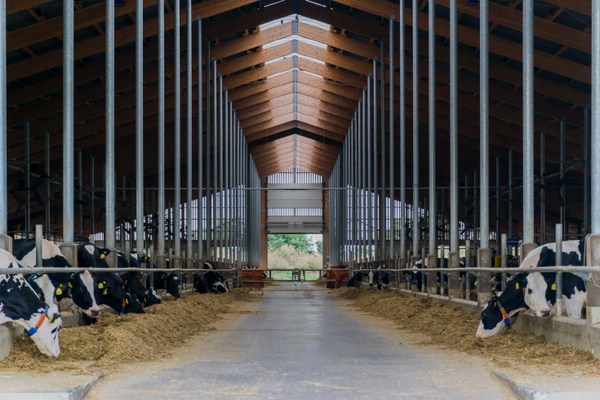
cows in barn methane
Photo by Deny Hill on Unsplash

Methane gas is a potent greenhouse gas that poses a significant threat to the environment. It is produced naturally by decomposing organic matter, but human activities such as livestock farming, landfills, and natural gas drilling also contribute to its release into the atmosphere. Methane is estimated to be 25 times more potent than carbon dioxide in terms of its warming potential, which means it has a significant impact on global climate change. Methane emissions also contribute to the formation of ground-level ozone, which can harm human health and ecosystems. Furthermore, methane in the atmosphere can react with other pollutants to form harmful compounds such as formaldehyde and other volatile organic compounds. Therefore, it is essential to reduce methane emissions to mitigate the negative impact on the environment and human health.

Valio and VTT, Technical Research Centre of Finland Ltd, are participating in an international research project exploring the use of plasma technology to capture the methane in barn air and break it down into carbon dioxide. In Finnish conditions, the methane emissions generated in conjunction with milk production account for about 50 percent of milk’s carbon footprint. The goal of the research project is to develop equipment that can convert the greenhouse gas methane that is captured from barn air into less harmful carbon dioxide.

In milk production, methane is generated in the cow’s rumen in conjunction with digestion and in the handling and storage of manure at dairy farms. Like carbon dioxide, methane is a greenhouse gas, but with a shorter, 28 times more potent warming effect on the atmosphere than carbon dioxide. In the atmosphere, methane decomposes into carbon dioxide in 10–12 years.

The EU area has about 1.8 million cattle farms with a total of approx. 77 million cows producing 158 MT CO2e of methane per year. Agriculture accounts for 10 percent of the EU’s greenhouse gas emissions, and methane generated by ruminants accounts for 43 percent of emissions from agriculture. The European Union Fit for 55 package aims for carbon neutrality in the agriculture sector by 2035. Achieving the target will require fast and cost-effective solutions.
“Our goal is to develop a new, eco-friendly, cost-effective technological solution that captures and breaks down the methane in barn air. This would enable us to cut the amount of barn air methane that ends up in the atmosphere by as much as 90 percent. When we convert the methane released in barn air into carbon dioxide, the more potent warming effect of methane is decreased. This, in turn, reduces the climate impacts of milk production by an estimated 30–40 percent,” says Juha Nousiainen, Valio’s Senior Vice President who heads the Climate programme.

Cold plasma technology can reduce methane’s warming effect already at the barn

Of the several gases in barn air, methane accounts for a very small fraction: some hundreds of parts per million. One cow produces about 15 kilograms of methane in a year. Early this year, the research project headed by VTT started measuring and identifying the gas mixture in barn air. The measuring is taking place at Valio’s Arvela dairy farm in Pöytyä, Finland, where there are 240 cows. Among the participants in the EU-funded, four-year CANMILK project are top universities, researchers and knowledge transfer partners from Belgium, England, Germany, and The Netherlands.
Cold plasma is present in many everyday things and phenomena, such as fluorescent tubes and in the sky creating northern lights. Cold plasma is formed when electrons in the gas become hot enough.

“Cold plasma is used to break down methane by exciting the gas molecules in the barn air to react with the methane. This is done using electricity in a unit located outside the barn,” says Senior Advisor Pekka Simell from VTT.

Developing new technology to control methane emissions is significant also on global level because reducing agriculture’s greenhouse gas emissions is necessary.

Valio’s ambitious climate programme consists of concrete actions to cut milk’s carbon footprint to zero by 2035. This means that an equal amount of greenhouse gases generated in milk production is sequestered by 2035.

Atmospheric methane breaks down into carbon dioxide in about 10–12 years. Atmospheric carbon dioxide is sequestered in plants and soil through photosynthesis. Like forests, grasses sequester and store carbon in their roots. Carbon dioxide is stored in grass as carbohydrates. When a cow eats grass, ruminates and burps, the carbon stored in the grass is released into the atmosphere as methane; the methane breaks down into carbon dioxide in 12 years – and re-emerges in plants through photosynthesis.

“It is clear that agricultural emissions must be significantly reduced. There are several alternatives, and not all methods have been invented yet. Cows enable us to produce high-quality food products also in northern regions where grass grows well but food crops do not produce sufficient yields. The trade-off for this is the methane emissions generated by the cows. However, we have several good possibilities for significantly reducing methane in the years to come. Methane capture and decomposition technology will help us get closer to our goal,” Juha Nousiainen sums up.

Written by Bracken · Categorized: Green Technology and Business Practices

Dec 19 2022

Plans for Biogas Production Plant by Valio and St1’s Joint Venture Suomen Lantakaasu Oy Progressing

Biogas is a form of alternative energy that is produced by the process of anaerobic digestion. It can be used as an energy source in a variety of ways, and it is also a renewable fuel.Biogas can be created from organic material, such as food waste, manure, sewage sludge or plant material. These organic materials are broken down by microorganisms in the absence of oxygen to produce methane gas (CH4) and carbon dioxide (CO2).

The advantages of biogas over fossil fuels are:

– It is renewable and sustainable.

– It has lower carbon emissions than fossil fuels.

– It has lower operating costs than fossil fuels.

 biogas production to fuel heavy transport
Picture from Valio

Finland’s biggest biogas production plant

Suomen Lantakaasu Oy, the joint venture of Valio and energy company St1, is planning to build Finland’s biggest biogas production plant in in Upper Savo, Finland. The Ministry of Employment and the Economy has granted EUR 19.2 million in funding for construction of Suomen Lantakaasu Oy’s biogas and liquefaction plant. The biogas plant will use dairy farm manure and agricultural by-products to produce renewable, liquefied biogas for use as transport fuel.
Suomen Lantakaasu Oy aims to produce a total of 1 TWh of renewable transport fuel, which corresponds to a quarter of Finland’s biogas target by 2030. St1 will distribute the biogas through its own nationwide network of fuelling stations for heavy-duty vehicles. The planned annual production capacity of the first biogas production plant is 125 GWh, and the goal is for the plant to be operational by 2026.

The Ministry of Employment and the Economy’s funding decision is conditional, as it is subject to approval by the European Commission. The funding will come from Europe’s RRF Recovery and Resilience Facility.

The plant project has progressed steadily during the year, and with the award of the investment grant, the next step will be to start tendering for the construction of the plant and a more detailed plant design process. The project will advance to the investment decision phase once the environmental and construction permits have been issued.

At the moment, agricultural companies in the Upper Savo region are being pursued through letters of intent. The manure and agro-biomass they generate can be used to produce liquefied biogas.

“We have been pleased with the positive reception in Upper Savo regarding our biogas plant plans. The farms in the region are interested in the project and, through the letters of intent, we have secured more than half of the manure feedstock required for the central plant. However, we still need more agricultural businesses in the region to become agro-biomass suppliers. There has also been interest in the areas around the potential satellite plants, and next year we will start signing these letters of intent. The goal is that the hybrid plant in Upper Savo will reach hundreds of farms,” says Director Leena Helminen, who is responsible for biogas business development at Valio.

When realised, the biogas plant will bring significant investments, tax revenue and new economic activity to Upper Savo. The plant complex will provide employment, both directly and indirectly, e.g. to logistics operators in the region.

The targeted production capacity of 1TWh would correspond to 100 million litres of traditional diesel and the production plant in Upper Savo would correspond to 12 million litres of diesel fuel. Thus, the biogas production will reduce food production and transport emissions. The biogas value chain also efficiently recycles nutrients and decreases nutrient run-off into water systems.

Adding to the interest for farms is the positive impact biogas production will have on farm profitability, as well as the measures improving the nutrient cycle.
Biogas has the potential to grow its market share as a fuel for heavy transport. Biogas produced from manure creates significant climate benefits and strengthens Finland’s energy and fuel self-sufficiency.

“Market growth will enable the production projects and, at the same time, will increase Finland’s energy self-sufficiency in the transition to a low-carbon energy system. Biogas technology makes it possible to produce new renewable fuel for the market by utilising raw materials that would otherwise not be recovered,” says Matti Oksanen, Director of St1’s Gas Business.

Biogas production is part of Valio’s climate programme aiming to cut milk’s carbon footprint to zero by 2035. Biogas also plays an important role in St1’s energy transition, and the company has invested heavily in biogas operations in the Nordic countries in recent years.

Finland’s biggest biogas plant

Suomen Lantakaasu’s plant, which is been planned for Upper Savo is a so-called hybrid plant. This means that there is one industrial-scale, centralised liquefied biogas production plant in Kiuruvesi and smaller satellite biogas plants in clusters of several farms elsewhere in the Upper Savo region
This will keep the biogas feedstock transport distances as short as possible. Suomen Lantakaasu will collect manure from farms and will provide the farms with the bio-fertiliser generated in the production of the biogas. The farm’s nitrogen fertiliser cost will decrease because the amount of soluble nitrogen in bio-fertiliser is up to 20-30 per cent higher than in manure.

Written by Bracken · Categorized: Green Technology and Business Practices

Oct 24 2022

Recovering Heat From A Factory Chimney

Recycling heat from industrial processes can have a number of benefits. One of them is the reduction in the amount of energy required for heating. This is because the heat that would normally be lost to the environment will now be used to heat buildings and other areas, where it is needed.  It’s a great way of reducing energy costs elsewhere in the industrial set up.

Industrial process heat recycling can also provide a way to generate electricity and produce clean power. This will help in reducing greenhouse gas emissions and improving air quality.  More and more companies are looking to make use of resources they already have to reduce their carbon footprint.

Valio’s biggest-ever energy-efficiency investment in Lapinlahti: recovering heat from the factory chimney

Valio’s biggest-ever energy-efficiency investment in Lapinlahti: recovering heat from the factory chimney
Image source: Valio/Markku Lempinen

The biggest energy-efficiency investment in Valio’s history has been completed at Valio’s Lapinlahti factory in the North Savo region of Finland. The new flue-gas condenser captures heat from the factory’s chimney and simultaneously scrubs it to make it cleaner. The factory’s energy consumption will decrease by more than 10 percent and its greenhouse gas emissions by about 10,000 CO2 tons per year, i.e. an amount equivalent to the annual emissions of some 4,900 passenger cars.

The Lapinlahti factory has the biggest total energy consumption of all Valio’s factories. The factory needs heat energy for two production processes in particular: drying milk powders and cooking cheese. The factory’s heat energy consumption can be decreased by as much as 25,000 MWh per year.

“We produce the heat energy needed by our factory primarily using biofuel in a heat plant located on site. Hot flue-gas is generated in conjunction with heat production. Previously, the heat energy contained in the approx. 150°C flue gas went to waste, but now the flue-gas condenser captures the thermal energy. Water sprayed into the flue gas absorbs the thermal energy of the flue gas. This combined with the heat pump technology results in 80°C hot water, which we utilise in production and in facility heating. We store the rest of the hot water in the new heat accumulator system. This gives us access to thermal energy when we need it the most,” says Energy Manager Peter Fabritius from Valio, a leading food and dairy company.

In addition to the energy savings, the system supports heat production especially during periods of peak consumption and reduces the use of light fuel oil-fired auxiliary boilers. It also lowers the factory’s energy bill.

“Valio’s target is to cut milk’s carbon footprint to zero by 2035. We have implemented a lot of energy-efficiency measures over the years. However, as a single measure, this is the most effective and tangible demonstration of the food industry’s sustainability work. The timing is right, as energy savings are needed now more than ever. Energy availability is a security of supply issue. Food factories must have continuous access to electricity in order to secure the Finnish food supply,” Fabritius concludes.

Valio’s investment includes a flue-gas condenser, a heat pump system, a heat accumulator and an extension to the factory’s heat distribution network. Our partner Adven Oy, a provider of energy and water services, is responsible for operation and maintenance of the system.

*Traficom: The average CO2 emissions from passenger cars on the road in 2021 was 147 g/km. Average kilometres driven ca. 14,000 km/a.

Written by Bracken · Categorized: Green Technology and Business Practices, Manufacturing

Primary Sidebar

About Us

OrzikWelcome to Orzik.  My name is Bracken Chalmers and I am the editor of Orzik: an industry and technology website.  To find out more about us, visit this page. Or contact us by email

Recent Posts

  • 5 Ways To Avoid Winter Driving Fines
  • Range Anxiety is a Thing of the Past: Why UK Drivers Can Go Electric with Confidence
  • How Heavy Car Keyrings Can Damage Your Car
  • THE GREAT BRITISH INVENTIONS WE NEVER KNEW WERE BRITISH
  • 5 Consequences of Neglecting Your Windshield in the UK

Pages

  • About Orzik
  • Privacy Policy

Categories

  • Auto
  • Aviation
  • Green Technology and Business Practices
  • Manufacturing
  • Medical/Pharmacy
  • Raw Materials
  • Shipping and maritime
  • Technology and Internet
  • Uncategorized

Copyright © 2026 · Altitude Pro on Genesis Framework · WordPress · Log in