• Skip to main content
  • Skip to primary sidebar

Orzik

Technology, Auto and Business

  • About Orzik

Manufacturing

Dec 07 2022

A Comprehensive Guide to Fake Fur Manufacture

Introduction: What is fake fur?

Fake fur or faux fur is a type of textile that is made to resemble the look and feel of animal fur. Faux fur can be made from synthetic materials, such as polyester, or from natural materials, such as cotton or wool.

fake fur manufacture
Photo by Alexander Grey on Unsplash

What is the Difference Between Artificial and Real Fur?

The difference between artificial and real fur is that the former is made of synthetic materials while the latter is made of animal hair or skin.

The two types of fur are different in terms of how they are manufactured. Fur made from synthetic materials can be created in a variety of colours and styles, while real fur cannot be dyed or styled. Artificial fur is also cheaper than its natural counterpart.

While quite desirable, real fur had the disadvantage of being expensive and in short supply. For this reason, fake furs were introduced on the market in 1929. From a fashion standpoint, they were of low quality, typically colored gray or tan, and could not compare to exquisite furs like mink or beaver. But the fabric was inexpensive and warm, so manufacturers continued to develop improved versions of the fake fur, trying to give it a denser look, better abrasion resistance, and more interesting colours.

In the 1940s, the quality of fake furs was vastly improved by advances in textile manufacture technology. However, the true modern fake furs were not developed until the mid 1950s, with the introduction of acrylic polymers. These polymers were particularly important because they could provide the bulk required to imitate real fur without the weight associated with other fake fur fabrics. They were also easier to colour and texture than previous fake fur fabrics. Later in the decade, polymer producers found that acrylic polymers could be made even more fur-like and fire resistant by mixing them with other polymers. These new fabrics, called modacrylics, are now the primary polymer used in fake fur manufacture.

Faux Fur Manufacturing Processes & Techniques

Faux fur is a type of fabric that is made to look like animal fur. Faux fur has been around for centuries, but the process of making it has changed over the years.

Nowadays the production of a fake fur can be mostly an automated process. First the fibres are synthesized. For example, for modacrylic polymers the acrylonitrile and vinyl chloride monomers are mixed together. They are subjected to increased pressure and temperature. Mixing blades are constantly in motion and the polymerization process begins. A white powdery resin is produced, which is then converted into a thick liquid by dissolving it in acetone. The liquid polymer mixture is then pumped through a filter to remove undissolved particles. From the filter, the material is pumped through spinnerets, in a water bath. When the polymer is extruded through, it emerges as a group of continuous fibres called a tow. The tow is then pulled along a conveyor belt and stretched. As well as being stretched the tow is also washed and dried. As it dries, the acetone is driven off, leaving only the polymer behind. The continuous fibres are then annealed, so making them stronger.  Next the fibres are dyed to the required colour and the backing fabric is added to make the material easy to use.

How is Faux Fur Used in Fashion Industry

Faux fur didn’t become popular until the 1970s. This was because more people started to care about animal welfare and wanted to avoid wearing real fur.  That desire to have the benefits of fur without the animal welfare cost has driven innovation.  The fashion industry has encouraged fabric manufacturers to push the boundares to create some wonderful new fabrics.

The most common types of faux furs are:

– Polyester Faux Fur

– Acrylic Faux Fur

– Silk Faux Fur

– Wool Faux Fur

Written by Bracken · Categorized: Manufacturing

Oct 24 2022

Recovering Heat From A Factory Chimney

Recycling heat from industrial processes can have a number of benefits. One of them is the reduction in the amount of energy required for heating. This is because the heat that would normally be lost to the environment will now be used to heat buildings and other areas, where it is needed.  It’s a great way of reducing energy costs elsewhere in the industrial set up.

Industrial process heat recycling can also provide a way to generate electricity and produce clean power. This will help in reducing greenhouse gas emissions and improving air quality.  More and more companies are looking to make use of resources they already have to reduce their carbon footprint.

Valio’s biggest-ever energy-efficiency investment in Lapinlahti: recovering heat from the factory chimney

Valio’s biggest-ever energy-efficiency investment in Lapinlahti: recovering heat from the factory chimney
Image source: Valio/Markku Lempinen

The biggest energy-efficiency investment in Valio’s history has been completed at Valio’s Lapinlahti factory in the North Savo region of Finland. The new flue-gas condenser captures heat from the factory’s chimney and simultaneously scrubs it to make it cleaner. The factory’s energy consumption will decrease by more than 10 percent and its greenhouse gas emissions by about 10,000 CO2 tons per year, i.e. an amount equivalent to the annual emissions of some 4,900 passenger cars.

The Lapinlahti factory has the biggest total energy consumption of all Valio’s factories. The factory needs heat energy for two production processes in particular: drying milk powders and cooking cheese. The factory’s heat energy consumption can be decreased by as much as 25,000 MWh per year.

“We produce the heat energy needed by our factory primarily using biofuel in a heat plant located on site. Hot flue-gas is generated in conjunction with heat production. Previously, the heat energy contained in the approx. 150°C flue gas went to waste, but now the flue-gas condenser captures the thermal energy. Water sprayed into the flue gas absorbs the thermal energy of the flue gas. This combined with the heat pump technology results in 80°C hot water, which we utilise in production and in facility heating. We store the rest of the hot water in the new heat accumulator system. This gives us access to thermal energy when we need it the most,” says Energy Manager Peter Fabritius from Valio, a leading food and dairy company.

In addition to the energy savings, the system supports heat production especially during periods of peak consumption and reduces the use of light fuel oil-fired auxiliary boilers. It also lowers the factory’s energy bill.

“Valio’s target is to cut milk’s carbon footprint to zero by 2035. We have implemented a lot of energy-efficiency measures over the years. However, as a single measure, this is the most effective and tangible demonstration of the food industry’s sustainability work. The timing is right, as energy savings are needed now more than ever. Energy availability is a security of supply issue. Food factories must have continuous access to electricity in order to secure the Finnish food supply,” Fabritius concludes.

Valio’s investment includes a flue-gas condenser, a heat pump system, a heat accumulator and an extension to the factory’s heat distribution network. Our partner Adven Oy, a provider of energy and water services, is responsible for operation and maintenance of the system.

*Traficom: The average CO2 emissions from passenger cars on the road in 2021 was 147 g/km. Average kilometres driven ca. 14,000 km/a.

Written by Bracken · Categorized: Green Technology and Business Practices, Manufacturing

Jun 09 2022

How Is Brexit Affecting Just In Time Manufacturing?

just in time manufacturing

https://unsplash.com/@wolfgang_hasselmann

Just in time (JIT) is an inventory management system, used to manage the stock that is kept in storage. It involves receiving goods from suppliers as and when they are required, rather than carrying a large inventory at once.  It has a lot of advantages: you need less room and you have less money tied up in stock.  Often it reduces waste too. The downsides are that you have to be organised and plan in advance.  Supply chain disruptions can cause your factory to stand idle. Despite these downsides JIT worked very well in Britain for a long time.  Then came Brexit.

A deal for Brexit was reached at the last minute which didn’t help businesses prepare.  Some had taken on extra stock to help them smooth over any difficulties and many had started preparing for no deal because negotiations were being left to the last minute.  Undoubtedly this increased costs for many firms as they invested in extra stock and rented storage space.  Manufacturers will need to continue to collaborate and work closely with their supply chains to ensure that they are resilient and can fully adapt to the new trading relationship between the UK and the EU.

Throughout the UK, industries are deeply interconnected with those in the rest of the European Union through complex cross-border supply chains. Such supply chains comprise intricate processes of value-adding by firms in different countries, with component goods and services crisscrossing borders multiple times before reaching the consumer.  The industries most affected are the automotive and electronics sectors, but JIT has spread throughout the UK’s industrial base.

Customs processes, however short, are simply incompatible with JIT systems because of the uncertainty associated with delivery time variations.The delays we are seeing at the borders especially the Dover-Calais route and our container ports is already causing problems for industries dependent on JIT inventories.  Many are having to store more product which means that they aren’t able to fully leverage the cost and efficiency benefits of JIT manufacturing.  The trouble is that those industries are competing with other firms and other sites that are within the EU and who haven’t had to change their practices in the same way.  This all adds onto to the cost of the product.  Increased costs mean you either have to sell at a higher price or you take a cut to your profit margin.  In ultra competitive fields higher prices are simply not an option if you want to stay in business.

It is hard to see how technology can provide solutions to these problems, given that individual truck-containers will not only contain supplies and components from numerous different suppliers, but also the composition of each container will differ from day to day and even hour to hour. Brexit isn’t good for business practices that have evolved in a world of almost frictionless trade.  Lobbying the UK government to realise the full effects of its damaging hard Brexit is one way forward, but that will take time.  In the meantime, companies will have to adapt to the newly adverse conditions as best they can.

Written by Bracken · Categorized: Manufacturing

Feb 11 2022

“Rub” Out Your Noise And Vibration Issues With Rubber Moulding

noise and vibration from machinery
Photo by Museums Victoria on Unsplash

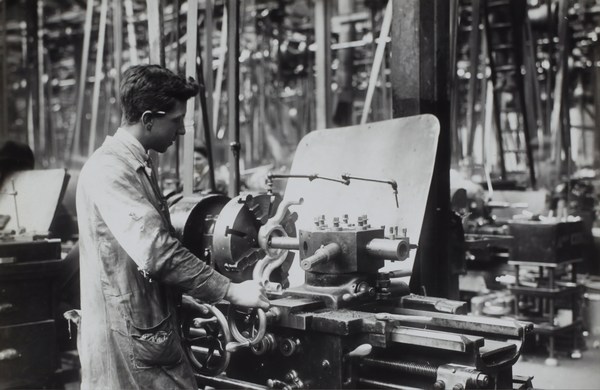
Noise and vibration are two of the most common problems in industrial plants. They are caused by the machines working in the plant. Noise is created by the machines themselves and vibration is created by machine movement.

Sound and vibration can cause many problems such as:

– decreased productivity

– higher risk of accidents

– higher risk of hearing loss

– higher risk of injuries

It’s well worth trying to address noise and vibration issues as it causes so many problems to your industrial plant.

How best to control and reduce sound and vibration?

Noise and vibration can be controlled in various ways, including blocking, absorbing, isolating and damping the noise source. The dictionary defines damping as “the dissipation of energy by conversion to heat.” Because rubber has such a low damping factor, it is one of the best materials for sound and vibration control. That’s why rubber moulding is an effective means of controlling noise, vibration and shock.

How exactly does damping with rubber moulding work? By reducing resonant vibration, it effectively mitigates both structural and impact noise. In effect, it produces a reduction in the inaudible sounds that are carried by structural surfaces.

If these sounds are inaudible, why do they need to be reduced? Because at resonance (increase in amplitude of oscillation), a considerable amount of audible airborne noise may be generated by that sound. While damping does not absorb the noise’s initial impact, in terms of both time and magnitude, it does reduce the “pinging’ or “roar” that results from that impact.

Whether the environment producing the noise is nautical, electrical, computer-related, aeronautical, or business-machine-applicable, rubber moulding can eradicate the offending sound and vibration. When considering a rubber molding noise and vibration solution, look for a line of isolators and mounts that come in a variety of styles and sizes. From one pound to one ton, the right type of mount for your application is vital. Also, keep in mind that the thicker the damping material is, the more sound and vibration it will control.  Something to consider whether you are making car parts or bicycle frames or something else.

No matter what the source of your vibration isolation problem, if you keep these recommendations in mind, the noise, vibration and shock you’re currently contending with can be efficiently controlled. Choose a leader in the rubber moulding industry, one that’s established a long track record of producing custom moulded rubber parts, and that sound and vibration problem of yours won’t be a problem for very much longer.

In summary, sound and vibration problems are a major concern in the manufacturing industry.  There are ways to deal with these issues and rubber moulding is an effective means of controlling sound and vibration. Whilst rubber moulding might not be the only strategy you use to deal with your noise, vibration and shock issues, it’s an important means to consider within your strategy for combating these issues.

Written by Bracken · Categorized: Manufacturing

Primary Sidebar

About Us

OrzikWelcome to Orzik.  My name is Bracken Chalmers and I am the editor of Orzik: an industry and technology website.  To find out more about us, visit this page. Or contact us by email

Recent Posts

  • 5 Ways To Avoid Winter Driving Fines
  • Range Anxiety is a Thing of the Past: Why UK Drivers Can Go Electric with Confidence
  • How Heavy Car Keyrings Can Damage Your Car
  • THE GREAT BRITISH INVENTIONS WE NEVER KNEW WERE BRITISH
  • 5 Consequences of Neglecting Your Windshield in the UK

Pages

  • About Orzik
  • Privacy Policy

Categories

  • Auto
  • Aviation
  • Green Technology and Business Practices
  • Manufacturing
  • Medical/Pharmacy
  • Raw Materials
  • Shipping and maritime
  • Technology and Internet
  • Uncategorized

Copyright © 2026 · Altitude Pro on Genesis Framework · WordPress · Log in