• Skip to main content
  • Skip to primary sidebar

Orzik

Technology, Auto and Business

  • About Orzik

Auto

Dec 14 2023

Driving into the Unknown: Unveiling the Surprising Lack of Basic Car Maintenance Knowledge Among British Drivers

replacement car parts
Photo by Sam Loyd on Unsplash

Learning to perform simple car maintenance and repairs can bring a multitude of benefits to vehicle owners. Firstly, it empowers individuals with a sense of self-sufficiency and independence. Being able to change the oil, replace the air filter, or fix a flat tire means less reliance on professional mechanics for routine tasks. This newfound skill can also lead to significant cost savings. Routine maintenance performed at home eliminates labor charges and allows for the purchase of affordable aftermarket parts. Additionally, a basic understanding of car repairs can contribute to increased vehicle longevity. Timely identification and resolution of minor issues prevent them from escalating into major, more costly problems. Moreover, having hands-on knowledge of one’s vehicle fosters a deeper connection with the car, promoting a sense of responsibility and care. Overall, the ability to undertake simple car maintenance tasks not only saves money but also enhances personal skills, instills confidence, and promotes a more conscientious approach to vehicle ownership.

As millions of Brits plan to hit the road on their Christmas get-aways, new research reveals the extent to which many of us are baffled as to how to operate even the most basic car functions.

In fact, a staggering thirteen percent of Brits are driving around, with no idea of how to even open the bonnet of their own vehicle.

The research finds that 43 percent of Brits are unsure on where spark plugs live or how to change the oil, whilst 42 percent can’t replace a headlight bulb, 35 percent can’t find the fan belt and 31 percent would have no idea how to jump start the car.

And while half (49 percent) say they want to be a greener and more sustainable driver, 78 percent have no idea they can request “green parts” when getting their car fixed, according to the poll by LV= General Insurance, while 82 percent didn’t know they existed.

The research comes as LV= General Insurance teams up with TV presenter and car enthusiast, Rory Reid, to support its Green Parts initiative, helping customers replace damaged car parts with recycled green parts.

Michael Golding, Network Manager at LV= General Insurance, “It’s encouraging to see drivers want to be more sustainable, as using green parts to repair a car has a 47 percent lower carbon impact than using brand-new parts. We’re on a mission to make more car owners aware of them.”

The survey found a fifth (21 percent) of respondents couldn’t even tell you the size of their car engine, with one in five (18 percent) confessing that they can’t turn on the cruise or traction control.

Asked why they don’t know anything about the “inner workings” of their car, nearly half (46 percent) don’t feel they need to know – as it is just a means of getting from A to B.

42 percent claim they only really worry when something goes wrong.

On average drivers experience three breakdowns a year, spending as much as £305 on repairs.

THINGS BRITISH DRIVER HAVE NEVER DONE / CANNOT DO…

1. Change a tyre – 45% (*Have never done, and don’t know how to)
2. Find the spark plugs – 43%
3. Change the oil – 43%
4. Replace a headlight bulb – 42%
5. Find the fan belt – 35%
6. Change the windscreen wiper blades – 31%
7. Jump start the car – 31%
8. Check the tread on the tyres – 20%
9. Put the cruise control on – 18%
10. Turn on the traction control – 18%
11. Check the oil – 16%
12. Check the water level – 16%
13. Put the car into 4×4 mode – 15%
14. Check the tyre pressure – 15%
15. Refill the screen wash – 14%
16. Open the bonnet – 13%
17. Work the Sat Nav – 11%
18. Connect phone to the car – 10%
19. Put the back seats down – 7%
20. Turn on the A/C – 7%

Written by Bracken · Categorized: Auto

Nov 09 2023

Legal expert shares seven driving fines to avoid this winter

driving in the winter
Photo by Jan Kronies on Unsplash

Navigating through challenging weather conditions requires more than just the ability to operate a vehicle; it demands a heightened sense of responsibility and consideration. As the elements unleash their fury, the road transforms into a battleground where each driver’s choices can either contribute to collective safety or escalate the risks. Driving carefully and considerately in difficult weather conditions is not merely a matter of personal caution; it’s a communal commitment to safeguarding the well-being of everyone on the road. In these moments, the steering wheel becomes a conduit for shared responsibility, and every cautious maneuver becomes a small but significant contribution to the greater task of ensuring a secure journey for all.

As longer days and autumn hues give way to crisp air and adverse weather, drivers’ have been warned to take extra caution on the roads.
Reports have found that traffic accidents peak from November to January, with severe accidents four times more common in the colder months. With this in mind, Top Rated Law have put together a list of driving rules to be aware of as temperatures plummet and the winter months draw closer

1. Wearing a coat, hat, gloves or scarf
As the temperatures drop, it can be tempting to wrap up warm on a frosty winter’s day. But due to the fact that scarves, hats, and puffy coats can impact visibility and the ability to use your car’s controls, winter clothing could be considered a hazard.
Gloves could also affect your ability to grip the steering wheel or gear stick. In fact, drivers are even warned that breaking this rule could even cost you a £5,000 fine.

2. Splashing pedestrians
You could rack up a whopping £5,000 fine if caught splashing pedestrians on a rainy day, especially after Met Office yellow warnings. This could be considered careless, incompetent, selfish, aggressive or inconsiderate behaviour on the road, and as such, you could be summoned to court and given three penalty points, with the same rule applying to cyclists.

3. Failing to clear snow and ice from roof and windows
As the saying goes; if you fail to prepare, prepare to fail, and in this instance, failing to prepare can be a costly error for UK drivers. It can be easy to miss when rushing out to your morning commute, but it is important to make sure windows are fully de-misted, and to remove any ice or snow from windows and the top of the car as this could fall off and into the path of other road users.
Drivers breaking this law are risking a fine of £60 – rising to £5000 if their vehicle is deemed dangerous – and three to nine points on their licence.

4. Incorrectly using fog lights
It may sound obvious, but you should never use your fog lights if visibility is clear as this could create a glare and dazzle both you and other drivers. According to The Highway Code, you should only rely on your fog lights when you can’t see 100 metres ahead of the car.
Using your fog lights unnecessarily is considered a safety hazard and could result in a £50 non endorsable Fixed Penalty Notice.

5. Check under the car before driving on cold mornings
Whilst checking under your car on a winter morning isn’t a legal requirement, motorists are still urged to have a quick look before setting off, as there could be sleeping animals sheltering from the cold. Cats and other animals could be seriously injured or killed if they decide to rest in the wheel arches during a chilly night, so it’s important to stay vigilant.

6. Driving with unrestrained pets
As we see the rise of pet owners opting to drive rather than walk in the cold and families travelling with their pets for Christmas, the Highway Code warns drivers to make sure dogs or other animals are suitably restrained so they cannot distract you while you are driving.
A seat belt harness, pet carrier, dog cage or dog guard are ways of restraining animals in cars. You could be charged for driving without due care and attention, which carries a maximum fine of £2,500 and nine penalty points.

7. Avoid on street parking if foggy
The Highway Code states that parking your vehicle on a street or roadway in foggy weather is especially dangerous. Foggy mornings are naturally a more common occurrence in the winter months, but drivers should avoid parking in fog at all times unless abandoning your vehicle is unavoidable, in which case you should leave parking lights switched on.

Written by Bracken · Categorized: Auto

Nov 17 2022

Overcoming the Difficulties of Winter Driving

One of the most common problems people have with winter driving is that it’s difficult to see what’s coming up in the road.  Another problem is that when you’re driving on a snow-covered road, your tires will often lose traction and you’ll slide out of control.  Winter driving throws so many hazards into the mix and increases many existing problems.  There are things you can do to make sure you are safer on the roads this winter.  Being prepared and having the right skills can go a long way towards making you feel safe when you are traveling in your car.

driving in the winter
Photo by Jan Kronies on Unsplash

Recent data revealed that more severe car accidents occur in winter than any other month of the year. The research showed that a disproportionate amount of accidents happened from November to February (close to 50 percent in just four months of the year).

But many accidents are avoidable (or at least less serious) if both drivers and vehicles are well prepared for the winter season. For this reason, used car buying service ChooseMyCar.com has compiled some top tips for driving in challenging winter circumstances.

Founder of ChooseMyCar.com, Nick Zapolski, believes forewarned is forearmed. “It’s really important to get yourself prepared for winter motoring, as half the battle is being ready. Breaking down in summer is a lot different to breaking down in the freezing cold weather, on an unlit road. Being aware and prepped for winter driving will give you some assurances before you make any journey, and help keep you and your family safe.”

Prepare your car for winter

It’s essential that your car is adequately prepared for winter, and that includes putting certain items inside it for emergencies. A warning triangle, water, high-vis clothing, warm clothing, torch, phone charger, de-icer, ice scraper, and blanket are all important items to keep in your vehicle over winter. Get your car checked over and consider winter tyres.

What do to if you break down on a dark unlit road

Should this happen to you, the very first thing you need to do is alert other drivers to your issue using your hazard lights. Once your hazards are on, and it’s safe to do so, pull over in the most suitable place, avoiding ditches, long grass or soft verges, as you may get stuck.
Once you’re safely stopped, place a warning triangle 45 metres behind your car and put on some high visibility clothing. If your vehicle is on the road, ensure you remain outside of the vehicle and away from the road. Call breakdown or another professional who can help. If you have no phone signal, wait for another car and flag them down.

Breaking down on a motorway

If you’re in an outside lane, indicate left and move over to the left hand lane. Then move onto the hard shoulder and put your hazard lights on. Exit your vehicle from the left hand side of the car and remain behind the safety barrier. Call national highways on 0300 123 5000, then a breakdown provider and anyone else that needs to know.

What to do if your brakes fail

Put your hazards on immediately and slow your vehicle, using your gears. Once you’ve reached a slow enough speed, use the handbrake to come to a complete stop. Ensure you’re steering your car to a suitable stopping place. In the worst case scenario, where you’re unable to bring the vehicle to a stop using your gears or brakes, you’ll have to use something to slow you down, such as the kerb or a safety barrier.

Driving on snowy or icy roads

If travel is unavoidable, the best tip is to take it steady. Ensure you leave enough time for your journey, and make sure your car is fully prepared. You may also want to consider changing to winter tyres or having some snow chains in your car. Double check that you have your safety items in your car, particularly de-icer, an ice scraper, warm clothes, food, and water in case you break down.
Once you head out onto the road, drive at a slower speed, in a higher gear, and keep a safe distance from other vehicles, as the braking distance in snow or ice is much further. Try to avoid harsh braking or too much acceleration. Be aware of black ice, which is often impossible to see apart from a shine on the road surface. If you do hit any ice, keep the steering wheel straight, maintain your speed, and do not hit the brakes. Maybe take a look at automatic tyre chains.

Flooded roads and heavy rain

Flash floods can happen very quickly and without warning. If you do get caught out in heavy rain on the road, turn your headlights on and drive to higher ground. Leave twice as much stopping distance as normal between the vehicle in front of you.
Try to avoid standing water if you can, however it is passable if care is taken. If the water is more than 10cm (4 inches) deep, don’t drive into it. If it’s less than 10cm, drive slowly and in first gear to ensure high revs. Once you get through the water, test your brakes immediately.

Flat tyre/tyre blowout

Calmly pull over in a safe place and put your hazard lights on. A flat tyre can be easily resolved, so make sure you’re carrying a spare or repair kit.
A blow out can be a scary experience, especially as our initial instinct to brake can make it worse. Braking can cause the vehicle to spin, so instead hold the steering wheel firmly and allow the car to slow down itself. Once you have slowed, try to find a safe place to stop and again, put your hazard lights on. Ensure you know how to change your tyre and it’s safe to do so. If you’re unsure how to change a tyre, or it’s unsafe to do so, call a breakdown provider.

Headlights stop working

If your headlights stop working, don’t stop suddenly, but instead ensure you pull over safely as soon as you can. Use other lights on your vehicle such as hazards, side lights, or even the interior light to ensure visibility.
Once pulled over, try to identify the cause of the problem. If the problem isn’t able to be fixed, call your breakdown provider. If you don’t have any cover, and it’s safe to do so, park your car in a safe place off the road, lock it and return to the vehicle in daylight to fix the issue, or get it towed to the nearest garage.

Written by Bracken · Categorized: Auto

Nov 09 2022

UK’s Deadliest Road

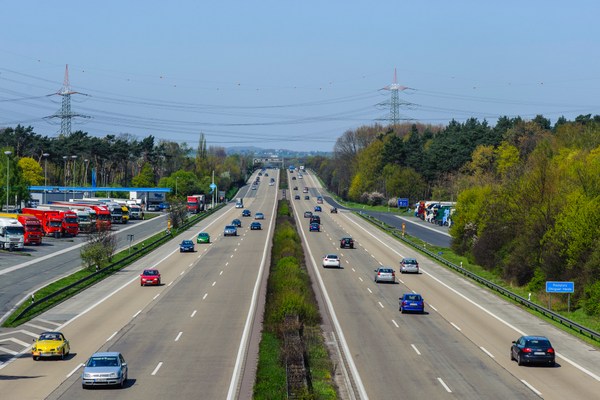
motorway
Photo by Alexander Schimmeck on Unsplash

The most common causes of accidents on a road are speeding, driving under the influence of alcohol and drugs, and distracted driving. Driving under the influence of alcohol and drugs can lead to impaired judgement, slower reaction times, and poor coordination. Distracted driving can lead to accidents due to inattention or distraction while operating a motor vehicle. Speeding is one of the most common causes of accidents on the road because it increases your chances of crashing into another car or object in your path. But, it’s not just driving behaviour that counts, some roads have a deadly reputation due to their accident toll.

* A 6 kilometre section of the A23, the road from London to Brighton, is the most dangerous road in Great Britain
* In 2021, a total of 1,608 people lost their lives on UK roads, up 6.07% from 2020, yet 11.06% down from pre-pandemic levels
* The City of London has the highest traffic fatality rate of all counties and city councils – 18.6 deaths per 10,000 residents

Every year, more than 1,700 people are killed in accidents on Britain’s roads, a figure that has remained relatively consistent over the past decade. While this sounds like a lot considering the constant improvements in road safety, statistics show that fewer people are killed or seriously injured on the roads than ever before.

In 1941, while the country was fighting World War II 9,169 people lost their lives in road accidents, the highest recorded fatality rate since the first national figures were published in 1926. The highest peacetime fatality rate was recorded in 1966, when 7,985 people lost their lives on the roads. What do current figures show, and which are the most dangerous roads in the UK? BonusInsider has extracted data for all road accidents in the UK for the past ten years, in order to identify the deadliest roads on which to travel.

Slight Increase in Traffic Deaths in 2021

In 2021, there were 101,087 traffic accidents resulting in personal injury in Great Britain, according to the Department for Transport. Fortunately, most of them, or roughly 77.5%, did not result in serious injuries. More than a fifth (21.06%) of the crashes were considered serious, while 1,474 of the collisions (1.46%) were fatal. The data shows that 1,608 people were killed in these accidents across the United Kingdom – 1,558 lost their lives in Great Britain and another 50 died in Northern Ireland.

This is an increase of 6.07% compared to 2020, when the pandemic slowed down most of our lives, and led to less traffic and subsequently, fewer casualties on the roads. Still, compared to pre-pandemic levels, traffic fatalities are significantly fewer – exactly 200 fewer deaths from 2019, which is a drop of 11.06%.

South East is the Most Dangerous Region

The regions of England where most people lost their lives in road accidents in 2021 were the South East (235 fatalities), the North West (190 fatalities), and the South West (168 fatalities). 51 people were killed in crashes in the North East, and another 75 died in London, making these the “safest” regions of England. In total, there were 1,329 fatalities in 1,254 accidents across England, another 143 fatalities in Scotland, 86 in Wales and 50 in Northern Ireland.

Most Accidents Occur in Daylight and in Fine Weather

The traffic data shows that most accidents, nearly 73%, occur in daylight, which makes sense, considering there is more traffic during the day. Nearly 19.7% of the crashes in 2021 happened during the night when vehicles had their lights turned on – in only 0.7% of the cases, the lights were turned off.  Interestingly, the weather conditions were good when 80.8% of all accidents occurred, compared to a little over 11.3% happening in rainy weather, 0.7% while it was snowing, and only 0.4% in mist or fog.

It is also worth noting that nearly 70% of all collisions occurred on roads where the speed limit is 30 mph – these are typically roads in urban areas. Only 3.35% of the accidents happened on motorways.

Britain’s Counties with the Most Traffic Fatalities per Capita

The Department for Transport publishes detailed data on traffic accidents, as reported by the different counties and city councils, thus making it possible to identify the counties with the most traffic fatalities per capita. According to the figures of the past 10 years, the City of London has the highest road fatality rate in all of Great Britain – 18.6 deaths per capita, or 18.6 fatalities per 10,000 residents, which is twice as high as the rates of other counties.

The explanation is quite simple – the City of London is the smallest ceremonial county in the UK. Covering a mere 1.12 sq mi, it has a population of 8,600, being mainly a business-oriented area. The country’s financial and trading sectors are largely based in the City, along with numerous office buildings and company headquarters, generating a lot of traffic. Very few people actually live in the City.

Northamptonshire, a county in the East Midlands with a population of 359,500, has the second-highest traffic fatality rate – 307 deaths or a rate of 8.54 deaths per 10,000 residents. Scotland’s Argyll & Bute and Powys in Wales follow with a rate of roughly 8.51 fatalities per 10,000 residents, and the fourth-highest rate (8.3 per capita) was recorded in Rutland, a county in the East Midlands.

The Deadliest Roads in Great Britain

According to the UK charity Road Safety Foundation, there are 37 “persistently higher risk” rural roads and 34 high risk urban roads in Great Britain. The organisation, whose aim it is to reduce road casualties, collects traffic data for all roads in England, Wales, and Scotland (and recently, for Northern Ireland). It calculates the risk of serious accidents for each road by comparing its length and the number of fatal crashes that have historically occurred on it.

With 26.7 fatal or serious crashes per km occurring between 2014 and 2019, the A23 from London to Brighton is the most dangerous road in Great Britain – a 6 kilometre section alone has seen 160 fatal accidents over the past few years.

Written by Bracken · Categorized: Auto

Sep 13 2022

Car Prices in the UK

The price of second hand cars has gone up since the pandemic. It’s not just covid though that causing the problem.  There are supply chain shortages like a reduced supply of computer chips.  Inflation has gone up too and everything costs more to transport due to rising fuel costs.  The UK has also suffered from problems with the collapse of the pound against the dollar and other currencies, partly due to Brexit.  The result is that it will cost us all more to buy cars whether used or brand new.  Here we take a look at how things have changed over the last few years.

 There are interesting observations that can be made as with some UK automakers the price increase goes as high as 52%.
The average weekly earnings for UK employees increasing by over 13% for the same timeframe. This would mean that the adjusted consumer purchasing power increased when it comes to buying just 2 of the 10 best selling models and decreased for the rest.

Prices of the UK’s best selling cars soared by as much as 52.13% over a 3 year period
Just like most of the world, the United Kingdom is currently experiencing an unprecedented gas and energy crisis combined with high inflation and mostly stagnated wages. The prices of new and used automobiles are also rising, with factors such as the COVID-19 pandemic and the increase in demand contributing to this change in the market.

Another reason why new cars now cost significantly more (twice as much for certain models) is the insufficient supply of semiconductor chips, according to experts. With automobiles simply unavailable at car dealerships, it becomes more difficult and, most of all, more expensive, to purchase a new vehicle. New car market data analysed by our team at BestBrokers reveals that the prices of some of the most popular cars in the United Kingdom have soared in 2022 compared to 2019 levels. We have looked at the prices of the ten best-selling cars in the United Kingdom and how they changed from 2019.

car pricesVauxhall Corsa SE Edition has seen the steepest surge in price over the past three years. While in 2019, the basic model was available for a little over £9,000, it jumped to £13,704 in 2022, or an increase of 52%. Another model that now sells for much more is Tesla Model 3 (Standard Range), which saw a 26% price increase to the now whopping £48,490.

Ford remains one of the most popular brands in the UK with two models in the 10 best-sellers for the 2019-2022 period, namely Ford Puma Titanium (15.7% up from 2019) and Ford Kuga Zetec (24% up from 2019). The other manufacturer with two entries on the list is South Korea’s Kia. The price for the basic Kia Sportage 130bhp model also increased in 2022 to £19,608.33 (up 20%). Interestingly, Kia New Niro Hybrid can be purchased for £20,712, an increase of only 4.3% from the previous generation.

“While the prices of the best selling cars surged by up to 22.2% over a period of 3 years in the US, top sellers in the UK are up way more – up to over 52% in 2022. This can be justified by a number of factors including surging inflation due to energy supply concerns, chip shortage and the conflict in Ukraine.”
– comments Alan Goldberg, market analyst at BestBrokers.

The other models that make up the top 10 best-selling cars in 2022 in the UK are Nissan Qashqai Visia (20% up from 2019), Mini Electric (up 3.8%), Volkswagen Golf GTI (up 14%), and Toyota Yaris Hybrid Icon (up 15%). Interestingly, nearly half of all models on the list are EVs or hybrids.

Written by Bracken · Categorized: Auto

  • « Go to Previous Page
  • Page 1
  • Page 2
  • Page 3
  • Page 4
  • Go to Next Page »

Primary Sidebar

About Us

OrzikWelcome to Orzik.  My name is Bracken Chalmers and I am the editor of Orzik: an industry and technology website.  To find out more about us, visit this page. Or contact us by email

Recent Posts

  • 5 Ways To Avoid Winter Driving Fines
  • Range Anxiety is a Thing of the Past: Why UK Drivers Can Go Electric with Confidence
  • How Heavy Car Keyrings Can Damage Your Car
  • THE GREAT BRITISH INVENTIONS WE NEVER KNEW WERE BRITISH
  • 5 Consequences of Neglecting Your Windshield in the UK

Pages

  • About Orzik
  • Privacy Policy

Categories

  • Auto
  • Aviation
  • Green Technology and Business Practices
  • Manufacturing
  • Medical/Pharmacy
  • Raw Materials
  • Shipping and maritime
  • Technology and Internet
  • Uncategorized

Copyright © 2026 · Altitude Pro on Genesis Framework · WordPress · Log in