• Skip to main content
  • Skip to primary sidebar

Orzik

Technology, Auto and Business

  • About Orzik

Dec 19 2022

Plans for Biogas Production Plant by Valio and St1’s Joint Venture Suomen Lantakaasu Oy Progressing

Biogas is a form of alternative energy that is produced by the process of anaerobic digestion. It can be used as an energy source in a variety of ways, and it is also a renewable fuel.Biogas can be created from organic material, such as food waste, manure, sewage sludge or plant material. These organic materials are broken down by microorganisms in the absence of oxygen to produce methane gas (CH4) and carbon dioxide (CO2).

The advantages of biogas over fossil fuels are:

– It is renewable and sustainable.

– It has lower carbon emissions than fossil fuels.

– It has lower operating costs than fossil fuels.

 biogas production to fuel heavy transport
Picture from Valio

Finland’s biggest biogas production plant

Suomen Lantakaasu Oy, the joint venture of Valio and energy company St1, is planning to build Finland’s biggest biogas production plant in in Upper Savo, Finland. The Ministry of Employment and the Economy has granted EUR 19.2 million in funding for construction of Suomen Lantakaasu Oy’s biogas and liquefaction plant. The biogas plant will use dairy farm manure and agricultural by-products to produce renewable, liquefied biogas for use as transport fuel.
Suomen Lantakaasu Oy aims to produce a total of 1 TWh of renewable transport fuel, which corresponds to a quarter of Finland’s biogas target by 2030. St1 will distribute the biogas through its own nationwide network of fuelling stations for heavy-duty vehicles. The planned annual production capacity of the first biogas production plant is 125 GWh, and the goal is for the plant to be operational by 2026.

The Ministry of Employment and the Economy’s funding decision is conditional, as it is subject to approval by the European Commission. The funding will come from Europe’s RRF Recovery and Resilience Facility.

The plant project has progressed steadily during the year, and with the award of the investment grant, the next step will be to start tendering for the construction of the plant and a more detailed plant design process. The project will advance to the investment decision phase once the environmental and construction permits have been issued.

At the moment, agricultural companies in the Upper Savo region are being pursued through letters of intent. The manure and agro-biomass they generate can be used to produce liquefied biogas.

“We have been pleased with the positive reception in Upper Savo regarding our biogas plant plans. The farms in the region are interested in the project and, through the letters of intent, we have secured more than half of the manure feedstock required for the central plant. However, we still need more agricultural businesses in the region to become agro-biomass suppliers. There has also been interest in the areas around the potential satellite plants, and next year we will start signing these letters of intent. The goal is that the hybrid plant in Upper Savo will reach hundreds of farms,” says Director Leena Helminen, who is responsible for biogas business development at Valio.

When realised, the biogas plant will bring significant investments, tax revenue and new economic activity to Upper Savo. The plant complex will provide employment, both directly and indirectly, e.g. to logistics operators in the region.

The targeted production capacity of 1TWh would correspond to 100 million litres of traditional diesel and the production plant in Upper Savo would correspond to 12 million litres of diesel fuel. Thus, the biogas production will reduce food production and transport emissions. The biogas value chain also efficiently recycles nutrients and decreases nutrient run-off into water systems.

Adding to the interest for farms is the positive impact biogas production will have on farm profitability, as well as the measures improving the nutrient cycle.
Biogas has the potential to grow its market share as a fuel for heavy transport. Biogas produced from manure creates significant climate benefits and strengthens Finland’s energy and fuel self-sufficiency.

“Market growth will enable the production projects and, at the same time, will increase Finland’s energy self-sufficiency in the transition to a low-carbon energy system. Biogas technology makes it possible to produce new renewable fuel for the market by utilising raw materials that would otherwise not be recovered,” says Matti Oksanen, Director of St1’s Gas Business.

Biogas production is part of Valio’s climate programme aiming to cut milk’s carbon footprint to zero by 2035. Biogas also plays an important role in St1’s energy transition, and the company has invested heavily in biogas operations in the Nordic countries in recent years.

Finland’s biggest biogas plant

Suomen Lantakaasu’s plant, which is been planned for Upper Savo is a so-called hybrid plant. This means that there is one industrial-scale, centralised liquefied biogas production plant in Kiuruvesi and smaller satellite biogas plants in clusters of several farms elsewhere in the Upper Savo region
This will keep the biogas feedstock transport distances as short as possible. Suomen Lantakaasu will collect manure from farms and will provide the farms with the bio-fertiliser generated in the production of the biogas. The farm’s nitrogen fertiliser cost will decrease because the amount of soluble nitrogen in bio-fertiliser is up to 20-30 per cent higher than in manure.

Written by Bracken · Categorized: Green Technology and Business Practices

Dec 07 2022

AeroBid is launching a brand-new industry game changer, The Empty Leg Marketplace

ways data and technology can transform private aviation
Photo by Yaroslav Muzychenko on Unsplash

The private aviation industry is a global business with a billion dollar revenue. It is a rapidly growing industry and that has accelerated since the pandemic. In 2019, North America boasted a business aviation fleet size of 25,237, bigger than all other regions’ fleet sizes. Europe owned the second largest, with 4,159. Australia and Oceania, on the other hand, had 778, the lowest among all the regions.

Private aviation companies offer a range of services such as leasing, chartering and management of private jets. They also provide services for the general public such as aircraft management and maintenance.  However, they are always looking for ways to make their business more efficient.

UK-based start-up, AeroBid, is launching an exciting new add-on to its platform “The Empty Leg Marketplace”. The team behind the AeroBid platform are confident that this new digital marketplace – designed specifically for empty leg flights – will tackle the inefficiencies in the growing empty-leg market once and for all.

The private aviation industry has sought long and hard to find a practical solution to fill empty legs. Estimates suggest that between 30-50% of all private jet flights fly empty.

With the launch of AeroBid in April 2022, the team behind the thriving platform has developed what they believe is the answer: “The Empty Leg Marketplace”, which they say has real potential to provide a viable solution to the challenge.

The challenge with unlocking the empty legs market is that empty-leg flights have pre-defined departures and destinations, are subject to last-minute changes in schedule, become available on short notice and go very fast. Existing methods to fill these empty legs often depend on static directories, alongside collating quotes via phone call and operator websites. Often, a time-consuming process that cannot keep pace with the changing, transient nature of empty-leg flight schedules.

Launched in April 2022, the AeroBid platform is an exclusive live marketplace for the private aviation industry. Designed to modernise and digitise the private charter booking process, the platform uses data and instant alerts to bring a fast, transparent, and convenient way for brokers to request charters for their clients, and for operators to receive and bid on live flight requests, in real-time. To keep up with customer demands and the growing need to find a sustainable and effective solution to fill empty legs once and for all, AeroBid’s Empty Leg Marketplace was born.

The platform’s key differentiator from the static marketplaces and directories currently on offer – is that its system is intelligent, live and evolving. It makes use of all the key features that make the AeroBid platform revolutionary, from its SMART flight alerts, focused user interface & experience f to its real-time marketplace functionality. In a few simple steps, Operators can instantly post their empty legs within the Empty Leg Marketplace and alert Brokers to the flight. “Our users are crying out for this added functionality”, says AeroBid CEO & Founder, Zaher Deir. “Static directories do not establish an easy and effective way for Brokers and Operators to buy and sell empty legs. A live marketplace makes this objective possible.”

The Empty Leg Marketplace provides Operators with complete control over how they choose to market their empty legs. From Airport-to-Airport routes, that are either fixed or flexible, right down to pricing that is either negotiable or non-negotiable. With AeroBid’s Empty leg Marketplace, Brokers can finally put offers forward to Operators and suggest pickups along the route all within the Platform. Furthermore, in early 2023, the Empty Leg Marketplace will be Integrating with the core AeroBid marketplace providing an intelligent matching system that will detect if there is a charter request already live within the AeroBid marketplace that can be matched with the empty leg flight and vice-versa. Providing Operators and Brokers with more opportunities to capitalise on their empty legs, and Brokers ample possibilities to secure their client’s charter requests at a cost-effective price.

Aiming to tackle the empty leg issue head-on and helping to improve the sustainability of private air travel, the AeroBid Empty Leg Market Place enables operators tangible opportunities to generate revenue on their otherwise empty, return or repositioning one-way trips, and provides brokers, and ultimately the end-user, more possibilities to secure private flights than ever before.

Founder and CEO Zaher Deir says, “Harnessing the power of empty legs is the next logical step for the private aviation industry to experience real growth towards a viable alternative for all.”

“After three decades in the aircraft and aviation industry, I understand altogether the issues impacting the private aviation sector. The lack of opportunity to monetize empty-leg flights and make better, more effective use of them – both from an Operational and a Brokerage perspective – is what’s holding the industry back.”

To build a sustainable future, the right digital platform is critical. By opening up the AeroBid marketplace to the empty sector, Operators and Brokers can work together to spark more efficient flight planning. Taking advantage of otherwise missed opportunities and making far better use of market demand.

Written by Bracken · Categorized: Aviation

Dec 07 2022

A Comprehensive Guide to Fake Fur Manufacture

Introduction: What is fake fur?

Fake fur or faux fur is a type of textile that is made to resemble the look and feel of animal fur. Faux fur can be made from synthetic materials, such as polyester, or from natural materials, such as cotton or wool.

fake fur manufacture
Photo by Alexander Grey on Unsplash

What is the Difference Between Artificial and Real Fur?

The difference between artificial and real fur is that the former is made of synthetic materials while the latter is made of animal hair or skin.

The two types of fur are different in terms of how they are manufactured. Fur made from synthetic materials can be created in a variety of colours and styles, while real fur cannot be dyed or styled. Artificial fur is also cheaper than its natural counterpart.

While quite desirable, real fur had the disadvantage of being expensive and in short supply. For this reason, fake furs were introduced on the market in 1929. From a fashion standpoint, they were of low quality, typically colored gray or tan, and could not compare to exquisite furs like mink or beaver. But the fabric was inexpensive and warm, so manufacturers continued to develop improved versions of the fake fur, trying to give it a denser look, better abrasion resistance, and more interesting colours.

In the 1940s, the quality of fake furs was vastly improved by advances in textile manufacture technology. However, the true modern fake furs were not developed until the mid 1950s, with the introduction of acrylic polymers. These polymers were particularly important because they could provide the bulk required to imitate real fur without the weight associated with other fake fur fabrics. They were also easier to colour and texture than previous fake fur fabrics. Later in the decade, polymer producers found that acrylic polymers could be made even more fur-like and fire resistant by mixing them with other polymers. These new fabrics, called modacrylics, are now the primary polymer used in fake fur manufacture.

Faux Fur Manufacturing Processes & Techniques

Faux fur is a type of fabric that is made to look like animal fur. Faux fur has been around for centuries, but the process of making it has changed over the years.

Nowadays the production of a fake fur can be mostly an automated process. First the fibres are synthesized. For example, for modacrylic polymers the acrylonitrile and vinyl chloride monomers are mixed together. They are subjected to increased pressure and temperature. Mixing blades are constantly in motion and the polymerization process begins. A white powdery resin is produced, which is then converted into a thick liquid by dissolving it in acetone. The liquid polymer mixture is then pumped through a filter to remove undissolved particles. From the filter, the material is pumped through spinnerets, in a water bath. When the polymer is extruded through, it emerges as a group of continuous fibres called a tow. The tow is then pulled along a conveyor belt and stretched. As well as being stretched the tow is also washed and dried. As it dries, the acetone is driven off, leaving only the polymer behind. The continuous fibres are then annealed, so making them stronger.  Next the fibres are dyed to the required colour and the backing fabric is added to make the material easy to use.

How is Faux Fur Used in Fashion Industry

Faux fur didn’t become popular until the 1970s. This was because more people started to care about animal welfare and wanted to avoid wearing real fur.  That desire to have the benefits of fur without the animal welfare cost has driven innovation.  The fashion industry has encouraged fabric manufacturers to push the boundares to create some wonderful new fabrics.

The most common types of faux furs are:

– Polyester Faux Fur

– Acrylic Faux Fur

– Silk Faux Fur

– Wool Faux Fur

Written by Bracken · Categorized: Manufacturing

Nov 17 2022

Overcoming the Difficulties of Winter Driving

One of the most common problems people have with winter driving is that it’s difficult to see what’s coming up in the road.  Another problem is that when you’re driving on a snow-covered road, your tires will often lose traction and you’ll slide out of control.  Winter driving throws so many hazards into the mix and increases many existing problems.  There are things you can do to make sure you are safer on the roads this winter.  Being prepared and having the right skills can go a long way towards making you feel safe when you are traveling in your car.

driving in the winter
Photo by Jan Kronies on Unsplash

Recent data revealed that more severe car accidents occur in winter than any other month of the year. The research showed that a disproportionate amount of accidents happened from November to February (close to 50 percent in just four months of the year).

But many accidents are avoidable (or at least less serious) if both drivers and vehicles are well prepared for the winter season. For this reason, used car buying service ChooseMyCar.com has compiled some top tips for driving in challenging winter circumstances.

Founder of ChooseMyCar.com, Nick Zapolski, believes forewarned is forearmed. “It’s really important to get yourself prepared for winter motoring, as half the battle is being ready. Breaking down in summer is a lot different to breaking down in the freezing cold weather, on an unlit road. Being aware and prepped for winter driving will give you some assurances before you make any journey, and help keep you and your family safe.”

Prepare your car for winter

It’s essential that your car is adequately prepared for winter, and that includes putting certain items inside it for emergencies. A warning triangle, water, high-vis clothing, warm clothing, torch, phone charger, de-icer, ice scraper, and blanket are all important items to keep in your vehicle over winter. Get your car checked over and consider winter tyres.

What do to if you break down on a dark unlit road

Should this happen to you, the very first thing you need to do is alert other drivers to your issue using your hazard lights. Once your hazards are on, and it’s safe to do so, pull over in the most suitable place, avoiding ditches, long grass or soft verges, as you may get stuck.
Once you’re safely stopped, place a warning triangle 45 metres behind your car and put on some high visibility clothing. If your vehicle is on the road, ensure you remain outside of the vehicle and away from the road. Call breakdown or another professional who can help. If you have no phone signal, wait for another car and flag them down.

Breaking down on a motorway

If you’re in an outside lane, indicate left and move over to the left hand lane. Then move onto the hard shoulder and put your hazard lights on. Exit your vehicle from the left hand side of the car and remain behind the safety barrier. Call national highways on 0300 123 5000, then a breakdown provider and anyone else that needs to know.

What to do if your brakes fail

Put your hazards on immediately and slow your vehicle, using your gears. Once you’ve reached a slow enough speed, use the handbrake to come to a complete stop. Ensure you’re steering your car to a suitable stopping place. In the worst case scenario, where you’re unable to bring the vehicle to a stop using your gears or brakes, you’ll have to use something to slow you down, such as the kerb or a safety barrier.

Driving on snowy or icy roads

If travel is unavoidable, the best tip is to take it steady. Ensure you leave enough time for your journey, and make sure your car is fully prepared. You may also want to consider changing to winter tyres or having some snow chains in your car. Double check that you have your safety items in your car, particularly de-icer, an ice scraper, warm clothes, food, and water in case you break down.
Once you head out onto the road, drive at a slower speed, in a higher gear, and keep a safe distance from other vehicles, as the braking distance in snow or ice is much further. Try to avoid harsh braking or too much acceleration. Be aware of black ice, which is often impossible to see apart from a shine on the road surface. If you do hit any ice, keep the steering wheel straight, maintain your speed, and do not hit the brakes. Maybe take a look at automatic tyre chains.

Flooded roads and heavy rain

Flash floods can happen very quickly and without warning. If you do get caught out in heavy rain on the road, turn your headlights on and drive to higher ground. Leave twice as much stopping distance as normal between the vehicle in front of you.
Try to avoid standing water if you can, however it is passable if care is taken. If the water is more than 10cm (4 inches) deep, don’t drive into it. If it’s less than 10cm, drive slowly and in first gear to ensure high revs. Once you get through the water, test your brakes immediately.

Flat tyre/tyre blowout

Calmly pull over in a safe place and put your hazard lights on. A flat tyre can be easily resolved, so make sure you’re carrying a spare or repair kit.
A blow out can be a scary experience, especially as our initial instinct to brake can make it worse. Braking can cause the vehicle to spin, so instead hold the steering wheel firmly and allow the car to slow down itself. Once you have slowed, try to find a safe place to stop and again, put your hazard lights on. Ensure you know how to change your tyre and it’s safe to do so. If you’re unsure how to change a tyre, or it’s unsafe to do so, call a breakdown provider.

Headlights stop working

If your headlights stop working, don’t stop suddenly, but instead ensure you pull over safely as soon as you can. Use other lights on your vehicle such as hazards, side lights, or even the interior light to ensure visibility.
Once pulled over, try to identify the cause of the problem. If the problem isn’t able to be fixed, call your breakdown provider. If you don’t have any cover, and it’s safe to do so, park your car in a safe place off the road, lock it and return to the vehicle in daylight to fix the issue, or get it towed to the nearest garage.

Written by Bracken · Categorized: Auto

Nov 09 2022

UK’s Deadliest Road

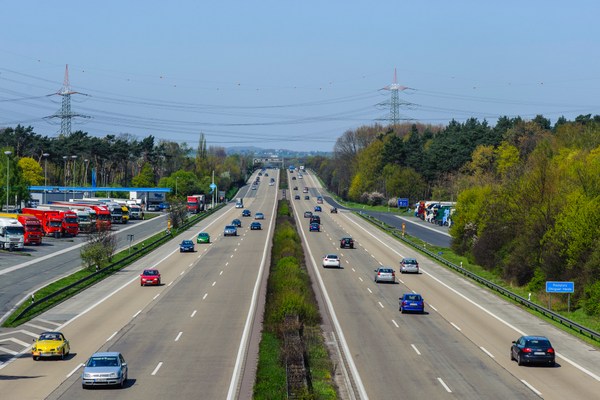
motorway
Photo by Alexander Schimmeck on Unsplash

The most common causes of accidents on a road are speeding, driving under the influence of alcohol and drugs, and distracted driving. Driving under the influence of alcohol and drugs can lead to impaired judgement, slower reaction times, and poor coordination. Distracted driving can lead to accidents due to inattention or distraction while operating a motor vehicle. Speeding is one of the most common causes of accidents on the road because it increases your chances of crashing into another car or object in your path. But, it’s not just driving behaviour that counts, some roads have a deadly reputation due to their accident toll.

* A 6 kilometre section of the A23, the road from London to Brighton, is the most dangerous road in Great Britain
* In 2021, a total of 1,608 people lost their lives on UK roads, up 6.07% from 2020, yet 11.06% down from pre-pandemic levels
* The City of London has the highest traffic fatality rate of all counties and city councils – 18.6 deaths per 10,000 residents

Every year, more than 1,700 people are killed in accidents on Britain’s roads, a figure that has remained relatively consistent over the past decade. While this sounds like a lot considering the constant improvements in road safety, statistics show that fewer people are killed or seriously injured on the roads than ever before.

In 1941, while the country was fighting World War II 9,169 people lost their lives in road accidents, the highest recorded fatality rate since the first national figures were published in 1926. The highest peacetime fatality rate was recorded in 1966, when 7,985 people lost their lives on the roads. What do current figures show, and which are the most dangerous roads in the UK? BonusInsider has extracted data for all road accidents in the UK for the past ten years, in order to identify the deadliest roads on which to travel.

Slight Increase in Traffic Deaths in 2021

In 2021, there were 101,087 traffic accidents resulting in personal injury in Great Britain, according to the Department for Transport. Fortunately, most of them, or roughly 77.5%, did not result in serious injuries. More than a fifth (21.06%) of the crashes were considered serious, while 1,474 of the collisions (1.46%) were fatal. The data shows that 1,608 people were killed in these accidents across the United Kingdom – 1,558 lost their lives in Great Britain and another 50 died in Northern Ireland.

This is an increase of 6.07% compared to 2020, when the pandemic slowed down most of our lives, and led to less traffic and subsequently, fewer casualties on the roads. Still, compared to pre-pandemic levels, traffic fatalities are significantly fewer – exactly 200 fewer deaths from 2019, which is a drop of 11.06%.

South East is the Most Dangerous Region

The regions of England where most people lost their lives in road accidents in 2021 were the South East (235 fatalities), the North West (190 fatalities), and the South West (168 fatalities). 51 people were killed in crashes in the North East, and another 75 died in London, making these the “safest” regions of England. In total, there were 1,329 fatalities in 1,254 accidents across England, another 143 fatalities in Scotland, 86 in Wales and 50 in Northern Ireland.

Most Accidents Occur in Daylight and in Fine Weather

The traffic data shows that most accidents, nearly 73%, occur in daylight, which makes sense, considering there is more traffic during the day. Nearly 19.7% of the crashes in 2021 happened during the night when vehicles had their lights turned on – in only 0.7% of the cases, the lights were turned off.  Interestingly, the weather conditions were good when 80.8% of all accidents occurred, compared to a little over 11.3% happening in rainy weather, 0.7% while it was snowing, and only 0.4% in mist or fog.

It is also worth noting that nearly 70% of all collisions occurred on roads where the speed limit is 30 mph – these are typically roads in urban areas. Only 3.35% of the accidents happened on motorways.

Britain’s Counties with the Most Traffic Fatalities per Capita

The Department for Transport publishes detailed data on traffic accidents, as reported by the different counties and city councils, thus making it possible to identify the counties with the most traffic fatalities per capita. According to the figures of the past 10 years, the City of London has the highest road fatality rate in all of Great Britain – 18.6 deaths per capita, or 18.6 fatalities per 10,000 residents, which is twice as high as the rates of other counties.

The explanation is quite simple – the City of London is the smallest ceremonial county in the UK. Covering a mere 1.12 sq mi, it has a population of 8,600, being mainly a business-oriented area. The country’s financial and trading sectors are largely based in the City, along with numerous office buildings and company headquarters, generating a lot of traffic. Very few people actually live in the City.

Northamptonshire, a county in the East Midlands with a population of 359,500, has the second-highest traffic fatality rate – 307 deaths or a rate of 8.54 deaths per 10,000 residents. Scotland’s Argyll & Bute and Powys in Wales follow with a rate of roughly 8.51 fatalities per 10,000 residents, and the fourth-highest rate (8.3 per capita) was recorded in Rutland, a county in the East Midlands.

The Deadliest Roads in Great Britain

According to the UK charity Road Safety Foundation, there are 37 “persistently higher risk” rural roads and 34 high risk urban roads in Great Britain. The organisation, whose aim it is to reduce road casualties, collects traffic data for all roads in England, Wales, and Scotland (and recently, for Northern Ireland). It calculates the risk of serious accidents for each road by comparing its length and the number of fatal crashes that have historically occurred on it.

With 26.7 fatal or serious crashes per km occurring between 2014 and 2019, the A23 from London to Brighton is the most dangerous road in Great Britain – a 6 kilometre section alone has seen 160 fatal accidents over the past few years.

Written by Bracken · Categorized: Auto

  • « Go to Previous Page
  • Page 1
  • Page 2
  • Page 3
  • Page 4
  • Page 5
  • Page 6
  • Interim pages omitted …
  • Page 10
  • Go to Next Page »

Primary Sidebar

About Us

OrzikWelcome to Orzik.  My name is Bracken Chalmers and I am the editor of Orzik: an industry and technology website.  To find out more about us, visit this page. Or contact us by email

Recent Posts

  • 5 Ways To Avoid Winter Driving Fines
  • Range Anxiety is a Thing of the Past: Why UK Drivers Can Go Electric with Confidence
  • How Heavy Car Keyrings Can Damage Your Car
  • THE GREAT BRITISH INVENTIONS WE NEVER KNEW WERE BRITISH
  • 5 Consequences of Neglecting Your Windshield in the UK

Pages

  • About Orzik
  • Privacy Policy

Categories

  • Auto
  • Aviation
  • Green Technology and Business Practices
  • Manufacturing
  • Medical/Pharmacy
  • Raw Materials
  • Shipping and maritime
  • Technology and Internet
  • Uncategorized

Copyright © 2026 · Altitude Pro on Genesis Framework · WordPress · Log in